
Yoke – Bondage or Freedom in Christ
A yoke is far more than a farmer’s tool. In Scripture it pictures whose authority we live under – and whether that authority enslaves us or sets us free.
What Is a Yoke?
A yoke is a sturdy wooden harness fitted across the necks of two oxen, coupling them together; the pair is then attached to whatever they are to pull. Because the two animals must share a common direction and pace, the yoke became a picture of partnership, service and control.
A yoke is therefore typified by hardship and bondage. We become slaves, or yoked, to whatever we have allowed to master us – whether a habit, a relationship or an ambition. We must each ask ourselves: do we truly want to remain tied to this?
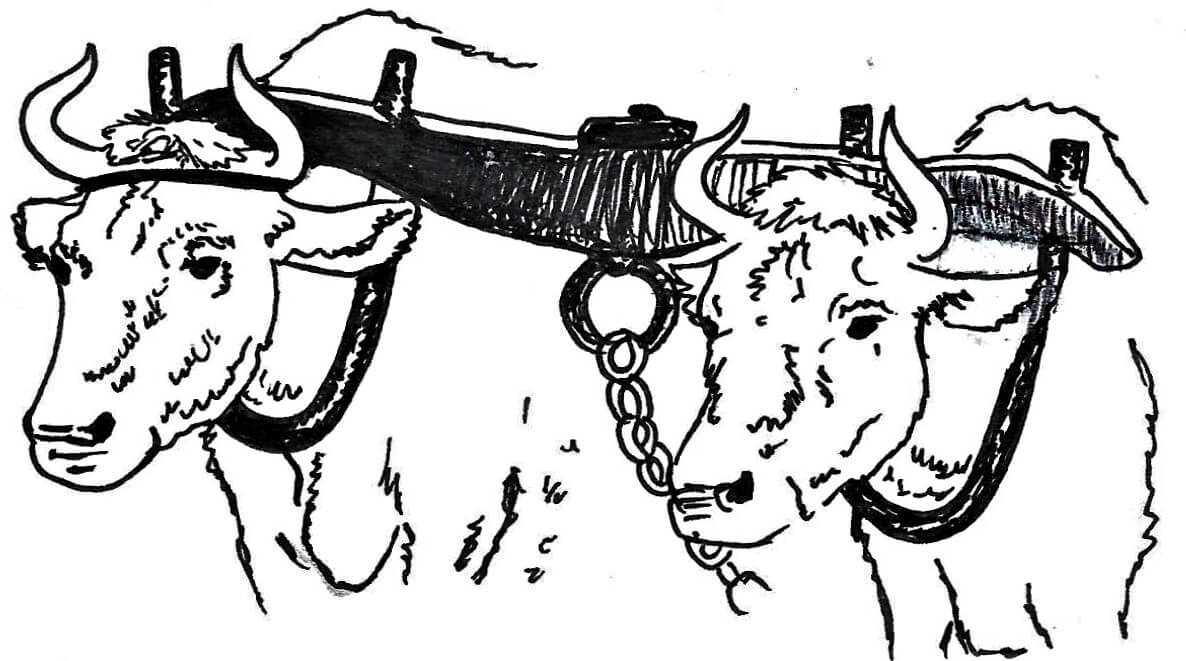
Two Masters and a Broken Yoke
Ultimately there are only two options to which we all give allegiance: either to God or to Satan, the latter often disguised as self.
However, Christ defeated the power of sin over us on the cross and, through the anointing of the Holy Spirit, He wants to break every yoke of bondage that oppresses us (Isa 10:27; Rom 6:11-22; 2 Pet 2:19; 1 Jn 3:8). With our co-operation and determination, including fasting, we can be set free by the power of God to walk in newness of life (Isa 58:6; Rom 6:4). “The Spirit of life in Christ Jesus has set me free from the law of sin and death” (Rom 8:2). This is freedom from sin: to live in connection with Him and for His glory.
Freedom was won at the cross – but it requires my co-operation
Yoked with Christ and with Others
Paul warned us not to be yoked – paired off – in marriage or a business relationship with a non-believer (2 Cor 6:14). It would be like an ox being teamed up with a horse: it just won’t work, for there is no unity of principles. Although we are not to be yoked to non-believers in close associations, we must mix with them on a friendship level so we can influence them for Jesus.
To what am I bound or yoked? Is it God honouring?
Jesus said, “Come to me… take my yoke upon you” (Mt 11:28-29). His yoke means Jesus is harnessed there with us; we don’t need to go it alone, for He shares our burdens. Am I ‘coupled’ with Jesus?
Scripture also contrasts two very different yokes on offer to every believer. The yoke of the law is a burden no one could carry: it demands perfect obedience and condemns everyone who falls short, which is why Peter called it “a yoke… that neither our ancestors nor we have been able to bear” (Acts 15:10). The yoke of grace is different – Christ has already carried the weight at the cross, and His yoke is “easy” and His burden “light” (Mt 11:30), not because following Him costs nothing, but because He supplies the strength to bear it. Living under grace means obeying from love rather than striving for acceptance.
In New Testament times slavery was also termed a yoke, yet Paul taught that slaves could demonstrate godly values even in that situation (1 Tim 6:1-2).
Breaking Free from an Unhealthy Yoke
Breaking free begins with honest identification: name whatever currently masters your time, habits and affections, and bring it into the open before God. Confess any agreement you have made with it and renounce its claim on your life, asking the Holy Spirit to cut the harness at its root.
Freedom is then maintained by replacement, not merely removal. Deliberately take Christ’s yoke in its place through daily surrender, Scripture and obedience, and stay accountable to mature believers who will notice when an old yoke quietly slips back on. Removal alone leaves a vacuum; only a new yoke – His – keeps the old one from returning.
His yoke fits; every other yoke chafes
In the end, every broken yoke points to the one Jesus freely offers: easy, light and shared with Him – the only yoke under which a soul can truly rest.
Biblical Examples of Yokes
Jeremiah wore a wooden yoke on his neck as a living sign that Judah must submit to Babylon’s discipline (Jer 27:2). It was a costly, uncomfortable picture of obedience, worn publicly so that everyone who saw him understood the message. When the false prophet Hananiah smashed it, promising an easier word, God replaced it with a yoke of iron (Jer 28:10-13) – a warning that there is no freedom in resisting the Lord’s correction, only a harder bondage than before.
When Rehoboam refused the elders’ counsel and threatened to rule with a heavier yoke than his father Solomon, the ten northern tribes rejected him and the kingdom tore in two (1 Kgs 12:4-16). His harsh answer cost him most of what he inherited, for leadership that loads people down, rather than serving them, always breaks fellowship. Heavy-handed authority promises control but delivers division.
In Leviticus the Lord promises, “I broke the bars of your yoke and enabled you to walk with heads held high” (Lev 26:13). The words were spoken over Israel after their rescue from slavery in Egypt, where Pharaoh’s yoke had bent their backs for generations. Every liberation He performs – from Egypt to the cross – reveals the same heart: God’s settled purpose is to see His people walk free, upright and unashamed before Him.
Reflection and Application
- Choose one habit that competes for your attention and take a practical step to loosen its grip this week.
- Review your closest partnerships: do they draw you closer to Christ or pull you away from Him?
- Begin each morning this week by handing the day’s pressures to Jesus before anything else.
- Thank God each day for one freedom He has already won for you at the cross.
See also: bondage, deliverance, fasting, habits, freedom, master, partnership, slave, surrender.