
Path: The Way We Choose to Walk
A path is more than a route — it is a direction of life shaped by the choices we make. Scripture presents two fundamental paths: the
broad way that leads to destruction and the narrow way that leads to life. The path we walk reveals the allegiance of our heart.
Two Ways, One Choice
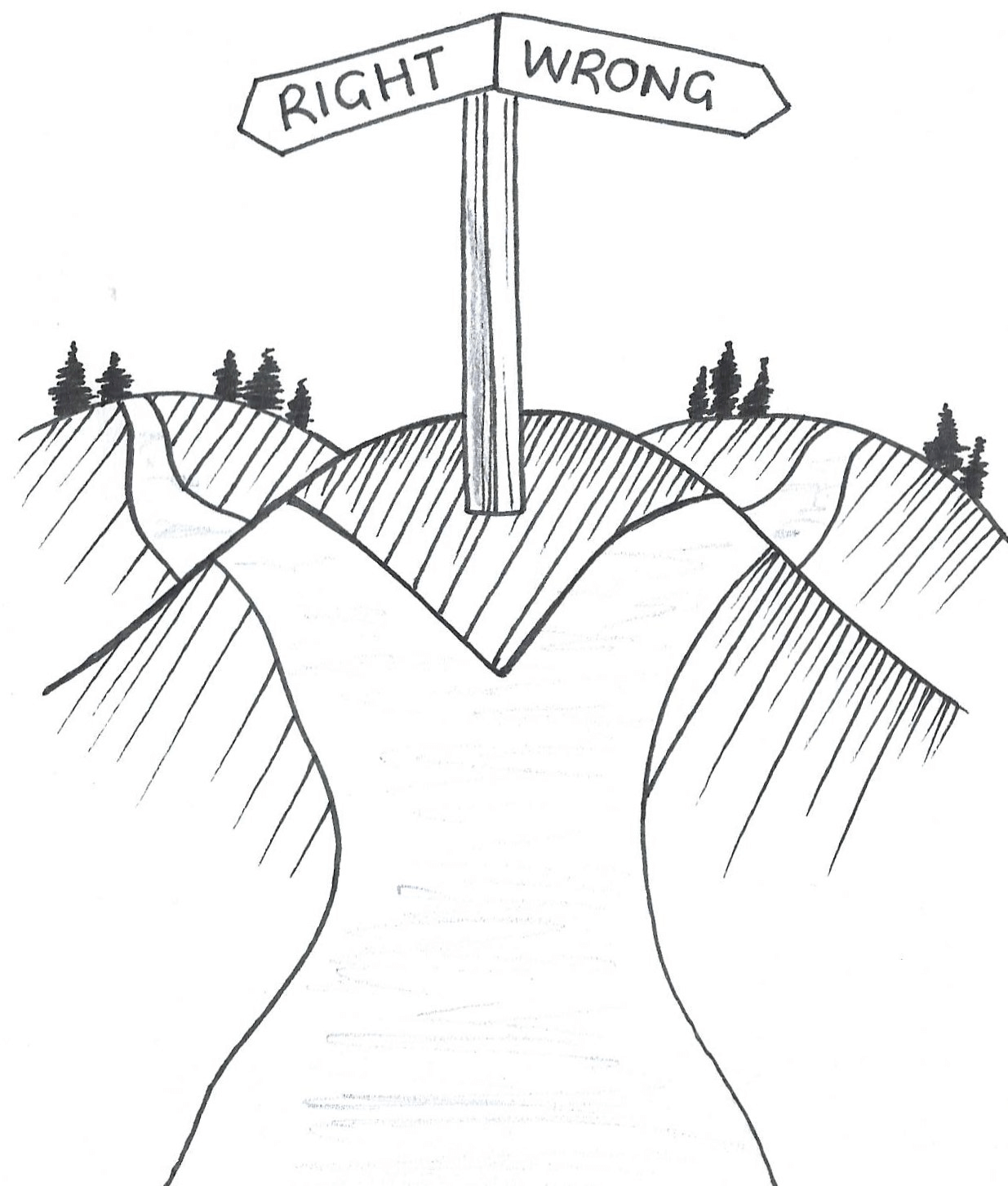
There are ultimately only two paths in life, and they lead to vastly different destinations — one to eternal life, the other to eternal damnation. The Bible warns us not to set foot on the inviting and wide pathway of sin, for it is crooked and devious, ending in eternal destruction; rather, keep to the path of righteousness which, although narrow and difficult, leads to life (Prov 2:11-15,20; Mt 7:13-14). The Psalmist declared, "The Lord is my shepherd; He leads me in the paths of righteousness, for His glory. Even when it leads through the valley of death He will guide me" (Ps 23:3-4). We are also instructed to "Acknowledge Him and He will direct your paths"; these will become clearer all the time, while in contrast the way of the wicked grows continuously darker (Prov 3:5-6, 4:18-19).
Life is a continual choice — God's path or Satan's
Guidance and Discernment Along the Way
"Your word guides me, illuminating the way ahead… You Lord have made known to me the path of life," but it is up to us to choose to walk those paths (Ps 16:11, 119:105; Isa 2:3; Lk 1:79). Ongoing guidance is needed, as often only the next step is revealed at any one time, so pray "Show me your ways, and teach me your paths." It is the humble and those who obey that He delights to guide (Ps 25:4,9,12). We are challenged to "ponder the path of our feet" — to continually monitor the direction of our life with careful and deliberate thought, taking only the ways approved by God (Prov 4:26).
Ponder the path of your feet
Satan's strategy is to divert us and draw us astray, often through subtle and gradual shifts rather than sudden turns; therefore we must remain watchful at all times (Prov 1:10,15, 4:14,27; 1 Pet 5:8). Walking with our eyes open — living in the light of God's truth rather than in spiritual darkness — keeps us from stumbling on the path. Jesus declared, "I am the light of the world. Whoever follows me will never walk in darkness, but will have the light of life" (Jn 8:12). Those who walk in the light see obstacles for what they are and can avoid them; those who walk in darkness stumble, not knowing what has caused their fall (Prov 4:19; Jn 11:9-10; 1 Jn 1:5-7).
Good companions are essential for support along the way. The wisdom of Scripture reminds us that "two are better than one" — if one falls, the other can lift him up, and a cord of three strands is not quickly broken (Eccl 4:9-12). We are warned that "bad company corrupts good character" and encouraged to walk with the wise to grow wise (Prov 13:20; 1 Cor 15:33). Accountability to others is vital — those who walk alongside us can see when we begin to wander and call us back before we stray too far. As the proverb warns, the wayfaring man, though a fool, need not err on it (Isa 35:8). Wrong choices lead down slippery, sinful pathways, so don't make hasty decisions and, especially in major areas of your life, seek counsel from mature leaders.
Walking the Path of Righteousness
Living in righteousness, love, integrity, and holiness are the general guidelines for all believers to walk the divine path through life. Specific individual callings have unique, tailor-made requirements — perhaps to remain single, to live simply to identify with a particular group, or become a missionary. May our testimony be, "My steps have held to your paths, my feet have not slipped" from the new and living way that Jesus has prepared for us to walk (Ps 17:5, 44:18; Heb 10:19-20).
Righteous living guided by the Word
The question is asked, "How can a young man keep his way pure?"; the answer is by living according to the Word of God stored within the heart (Ps 119:9,11,101,128). Communing with the Lord and spending time reading, studying, meditating on, and memorising the guidebook — the Bible — will keep us from deception, and our life will be a success (Josh 1:8; Ps 1:1-6; Prov 4:13, 7:25).
The Journey of Faith
Walking the path of righteousness is not a single decision but a lifelong journey of faith — a daily surrender that deepens with every step taken in trust. Abraham was called to go out to a place he would later receive as his inheritance, and "he went out, not knowing where he was going" (Heb 11:8). So it is with every believer: the journey of faith means trusting the One who leads more than the road that is seen. Faith is the assurance of things hoped for, the conviction of things not yet visible (Heb 11:1), and it is this faith that keeps us moving forward when the path is unclear.
The journey is rarely easy — it passes through wilderness and trial, yet these very hardships produce perseverance, character, and hope (Rom 5:3-5). Scripture reminds us that the righteous shall live by faith (Hab 2:4; Rom 1:17), and that without faith it is impossible to please God (Heb 11:6). Each step of obedience — however small — is an act of faith that strengthens our resolve and draws us closer to our destination. The journey of faith is not about arriving instantly, but about remaining faithful along the way, trusting that He who began a good work in us will carry it on to completion (Phil 1:6).
Faith is the journey, not just the first step
Reflection and Application:
- Which path are you currently walking — the broad way or the narrow way? What evidence in your daily choices confirms this?
- When only the next step is revealed, do you trust God for the full direction, or do you rush ahead? How might practising patience change your journey?
- Are there areas where hasty decisions have led you down a slippery path? What counsel or accountability could help you choose more wisely?
- How might storing God's Word in your heart this week keep your feet from slipping on the path ahead?
See also: choice, consequences, eternal damnation, eternal life, guidance (divine), obedience, walk, way, wilderness wanderings.